Pregnancy changes everything: posture, breathing, sleep, stress levels, and how your body responds to movement. If you are expecting and wondering what kind of training is actually safe and useful, you are not alone. Most women I meet ask the same practical questions: "Can I still train my core?", "Should I do pelvic floor exercises every day?", "What is safe in each trimester?", and "How do I prepare for birth without overdoing it?"
The short answer: with the right guidance, prenatal Pilates can be one of the most effective ways to stay strong, mobile, and connected to your body throughout pregnancy. The key is not doing "more" exercise; it is doing the right exercises at the right time, with the right modifications.
In this guide, I will walk you through a trimester-specific approach we use at PT Studio 7 in Amsterdam: what to focus on, what to avoid, how to train your pelvic floor intelligently, and when private sessions are the smartest option.
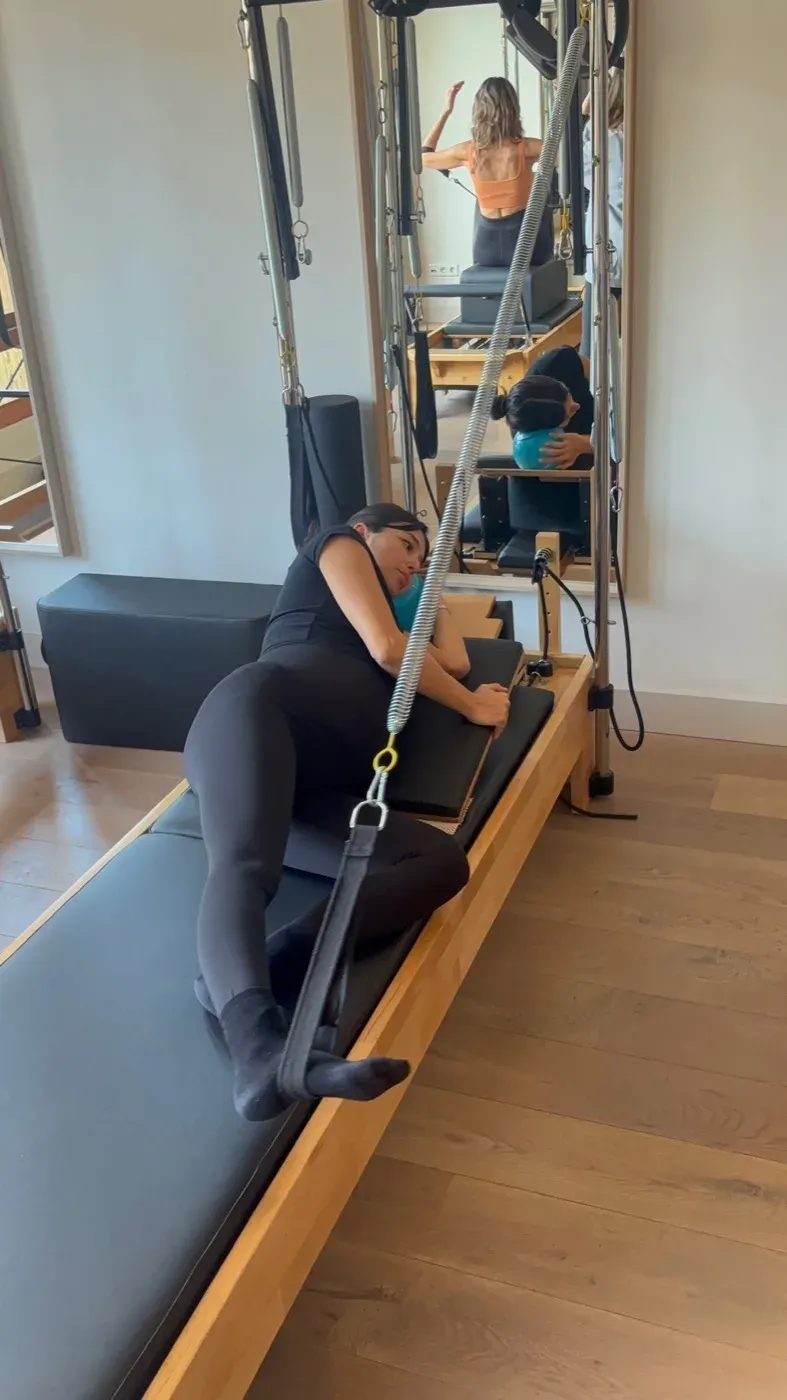
Why Prenatal Pilates Works So Well
Prenatal Pilates is not random stretching. It is targeted movement training that supports the exact systems under pressure in pregnancy:
- Posture and spinal support: As your center of gravity shifts, your back, glutes, and deep core need better coordination.
- Breathing mechanics: Your ribcage and diaphragm need space and mobility as the baby grows.
- Pelvic floor function: You need both strength and release, not just constant tightening.
- Hip and thoracic mobility: Helpful for comfort, sleep, and preparing for labor positions.
- Nervous system regulation: Breath-led movement can reduce anxiety and help you recover faster between demanding days.
Most importantly, Pilates is scalable. Sessions can be adapted to energy level, symptoms, and medical context week by week.
Before You Start: The Safety Framework
Every pregnancy is different. Before beginning or continuing training, we always recommend medical clearance from your midwife or obstetric provider. During sessions, use these principles:
- Train at moderate intensity (you should be able to speak comfortably).
- Avoid breath-holding and high-pressure abdominal strategies.
- Prioritize alignment, rhythm, and control over range or load.
- Stop immediately if pain, dizziness, bleeding, contractions, or unusual symptoms appear.
If you are dealing with pelvic pain, pubic symphysis discomfort, high blood pressure, IVF-related anxiety, prior miscarriage history, or significant fatigue, private training is often the safest and most effective path. You can review options on our private session pricing page.
First Trimester (Weeks 1-13): Build Capacity Without Overload
The first trimester can feel unpredictable. Some women feel strong; others experience fatigue, nausea, dizziness, or food aversions. This is not the time to chase performance. It is the time to establish movement habits that support the months ahead.
Primary Goals in Trimester 1
- Maintain gentle full-body strength.
- Improve breathing and rib mobility.
- Learn deep core engagement without bracing.
- Create consistency with manageable sessions.
What We Typically Emphasize
- Supported Reformer footwork for lower body alignment.
- Gentle glute and lateral hip work for pelvic stability.
- Upper back endurance to offset posture changes early.
- Breath-coordinated core activation (especially transverse abdominis awareness).
Common Mistakes in Trimester 1
- Training exactly as before pregnancy with no modifications.
- Using "all or nothing" thinking: either hard training or no movement at all.
- Over-focusing on ab exercises instead of whole-body support patterns.
If your symptoms fluctuate daily, private sessions can help preserve progress without overwhelm. A good coach adapts session structure in real time so you finish feeling better, not depleted. For tailored one-on-one work, check our private class packages.
Second Trimester (Weeks 14-27): Strength + Stability + Space
The second trimester is often the "golden window" for prenatal training. Energy usually improves, but structural changes become more obvious: your bump grows, posture shifts, and joint laxity can increase. Smart programming now can make late pregnancy dramatically more comfortable.
Primary Goals in Trimester 2
- Maintain leg and posterior-chain strength for daily load.
- Protect lower back by improving pelvic and thoracic control.
- Develop pelvic floor awareness: contract, release, and coordinate with breath.
- Preserve hip mobility without overstretching lax joints.
Pelvic Floor Focus in Trimester 2
This is where many women receive confusing advice. "Do kegels" is incomplete guidance. A healthy pelvic floor during pregnancy needs three capacities:
- Awareness: Can you feel the lift and the release?
- Timing: Can you coordinate pelvic floor response with exhale and effort?
- Elasticity: Can the tissue soften and lengthen when needed?
Only training contraction can create excess tension. We train both phases: support and surrender. This becomes especially valuable for birth preparation and postpartum recovery.
Sample Trimester 2 Session Priorities
- Reformer lower-body patterns with pelvic alignment cues.
- Side-lying and seated sequences for safe core integration.
- Thoracic extension and rotation for breathing comfort.
- Functional transitions (sit-to-stand, step work, controlled carries).
What We Usually Reduce or Modify
- Long periods lying flat on your back (individual tolerance matters).
- High-pressure loaded flexion strategies.
- Aggressive end-range stretching in already mobile joints.
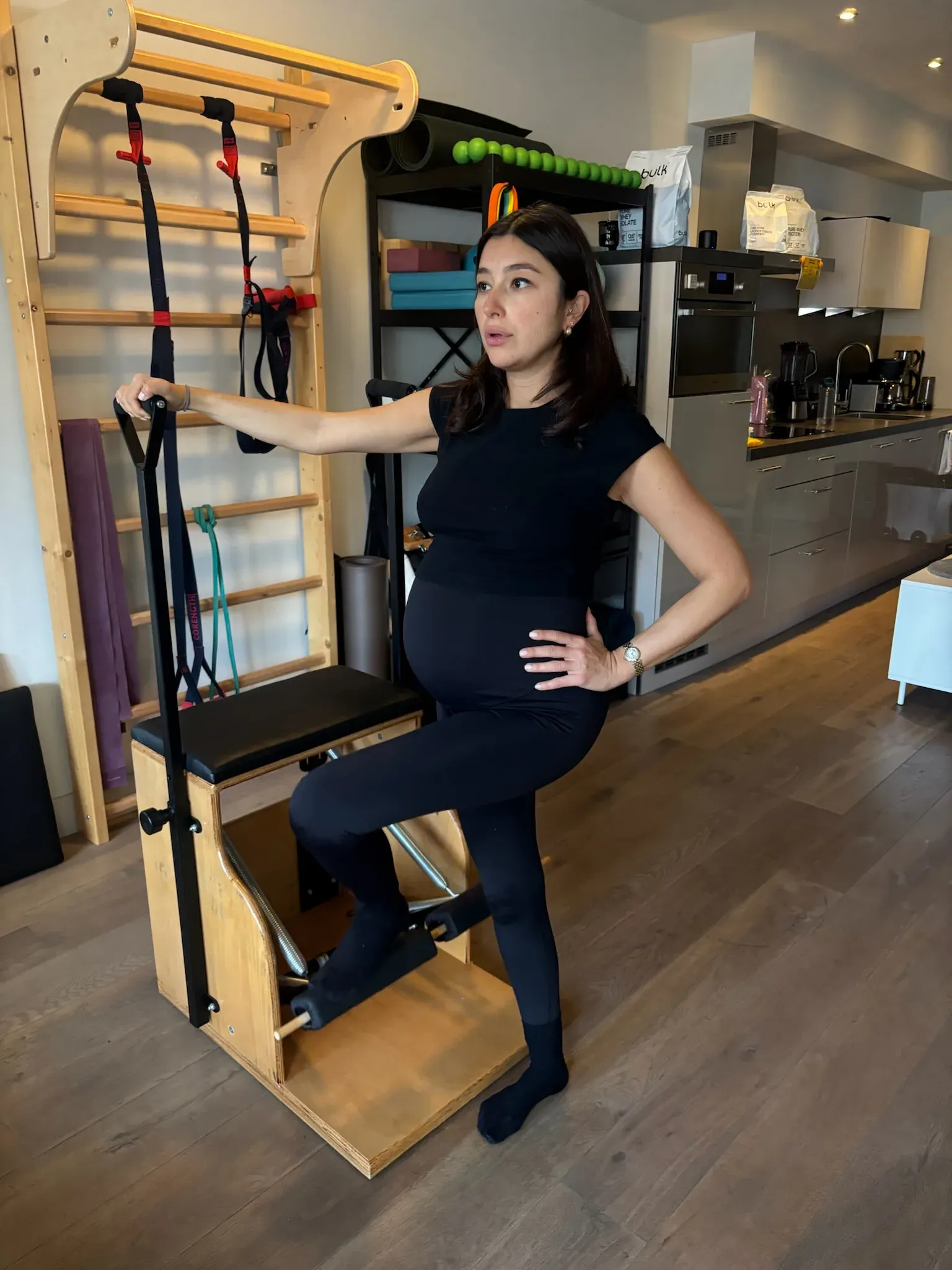
Third Trimester (Weeks 28-Birth): Comfort, Efficiency, Birth Preparation
In the third trimester, the mission changes. We are no longer "building fitness" in the traditional sense. We are preserving function, reducing discomfort, supporting confidence, and preparing your body for labor and early postpartum demands.
Primary Goals in Trimester 3
- Reduce back, hip, and rib discomfort.
- Train breathing patterns for effort and down-regulation.
- Maintain circulation and movement confidence.
- Practice pelvic floor release and pelvic mobility strategies.
Breathwork That Actually Helps
Breathwork is not just relaxation. We teach breathing as a practical skill:
- Lateral rib breathing to improve comfort as abdominal space decreases.
- Long exhale patterns to reduce unnecessary tension and improve trunk support.
- Down-training breath cues to support pelvic floor release and calm under stress.
Movement Strategies in Trimester 3
- Supported squat variations and hip-opening drills within comfort range.
- Gentle spinal mobility and side-body decompression.
- Upper-back and shoulder endurance for feeding and carrying preparation.
- Very intentional transitions to prevent strain in daily life.
This stage is where one-on-one guidance often matters most. You may need pillows, props, modified equipment setup, and frequent pacing adjustments. If you want a personalized third-trimester plan, our private prenatal pricing options are designed for exactly this phase.
Pelvic Floor Deep Dive: Strength Is Only Half the Story
Let us address one of the biggest prenatal myths: a strong pelvic floor is not always a better pelvic floor. During pregnancy and birth, your pelvic floor must respond to changing pressure loads and eventually allow expansion for delivery.
What Balanced Pelvic Floor Training Includes
- Connection: recognizing pelvic floor activity without gripping the glutes or jaw.
- Coordination: exhale with effort, inhale for release and expansion.
- Endurance: low-level sustained support for posture and daily movement.
- Relaxation capacity: intentional softening to reduce over-tension.
When we train this way, women often report less heaviness, improved bladder confidence, better bowel comfort, and less fear around labor mechanics. It also supports a smoother transition into postpartum rehab.
Why Prenatal Sessions Are Private Only
At PT Studio 7, prenatal Pilates is offered exclusively as private training. Pregnancy is highly individual, and session planning must be tailored to each person's medical history, symptoms, trimester stage, and day-to-day changes.
Private Sessions Are Ideal If You Have:
- Pelvic girdle pain or pubic symphysis discomfort.
- Urinary leakage, urgency, or pressure symptoms.
- Back pain that worsens with generic class formats.
- High anxiety around movement after prior pregnancy complications.
- A goal for highly specific birth-prep coaching.
Private training also helps if you are short on time and want maximum quality in a single weekly session. You can compare all options on our pricing page, including one-on-one packages.
How Often Should You Train During Pregnancy?
There is no single perfect number, but here is what works for most clients:
- 1 session/week: great for symptom management and continuity.
- 2 sessions/week: ideal for strength and comfort progression.
- 3 shorter sessions/week: useful if you tolerate movement well and want routine.
Consistency beats intensity. Even one thoughtful session per week can significantly improve comfort, mobility, and confidence when done well.
Red Flags: When to Pause and Contact Your Provider
Stop training and seek medical advice if you notice:
- Vaginal bleeding or fluid leakage.
- Persistent dizziness, chest pain, or shortness of breath at rest.
- Regular painful contractions before term.
- Severe headache, vision changes, or sudden swelling.
- Sharp pelvic or abdominal pain that does not settle quickly.
Good prenatal coaching is never "push through." It is responsive, conservative when needed, and always collaborative with your healthcare team.
Preparing for Postpartum Starts During Pregnancy
Many women think postpartum recovery begins after birth. In reality, the groundwork starts now. During pregnancy, we build patterns that support your first months with a baby:
- Safe lifting mechanics for car seats and daily carrying.
- Upper-back endurance for feeding posture.
- Breath and core strategies for pressure management.
- Pelvic floor awareness for early-stage recovery progression.
This is one reason prenatal Pilates can reduce the frequency of common postpartum challenges such as persistent back pain, poor posture, and urinary incontinence symptoms.
A Practical Weekly Template
If you like structure, this simple template works well for many expecting mothers:
- 1-2 Pilates sessions: supervised, trimester-specific training.
- 2-4 gentle walks: 20-40 minutes based on energy.
- Daily breath practice: 5 minutes of rib breathing + long exhale.
- Mobility mini-routine: hips, thoracic spine, ankles before bed.
Simple routines are easier to sustain when sleep, appetite, and schedule are changing every week.
Final Thoughts: Train for Confidence, Not Perfection
Prenatal Pilates is not about looking a certain way during pregnancy. It is about feeling capable in your changing body. The goal is to move with less fear, breathe with more control, and prepare for birth and postpartum with practical tools that actually transfer to real life.
If you are in Amsterdam and want guidance that adapts to your trimester, symptoms, and goals, we are here to help with private prenatal sessions designed specifically for your body and stage of pregnancy.
Related Pages for Pregnancy Support in Amsterdam
- Reformer Pilates Amsterdam — see how classes are structured and what to expect.
- Private session pricing — compare one-on-one packages for trimester-specific support.
- For healthcare providers — referral information for physiotherapists, GPs, and specialists.
Ready for personalized prenatal support? See our private session pricing, then book your session at PT Studio 7 Museumplein.